

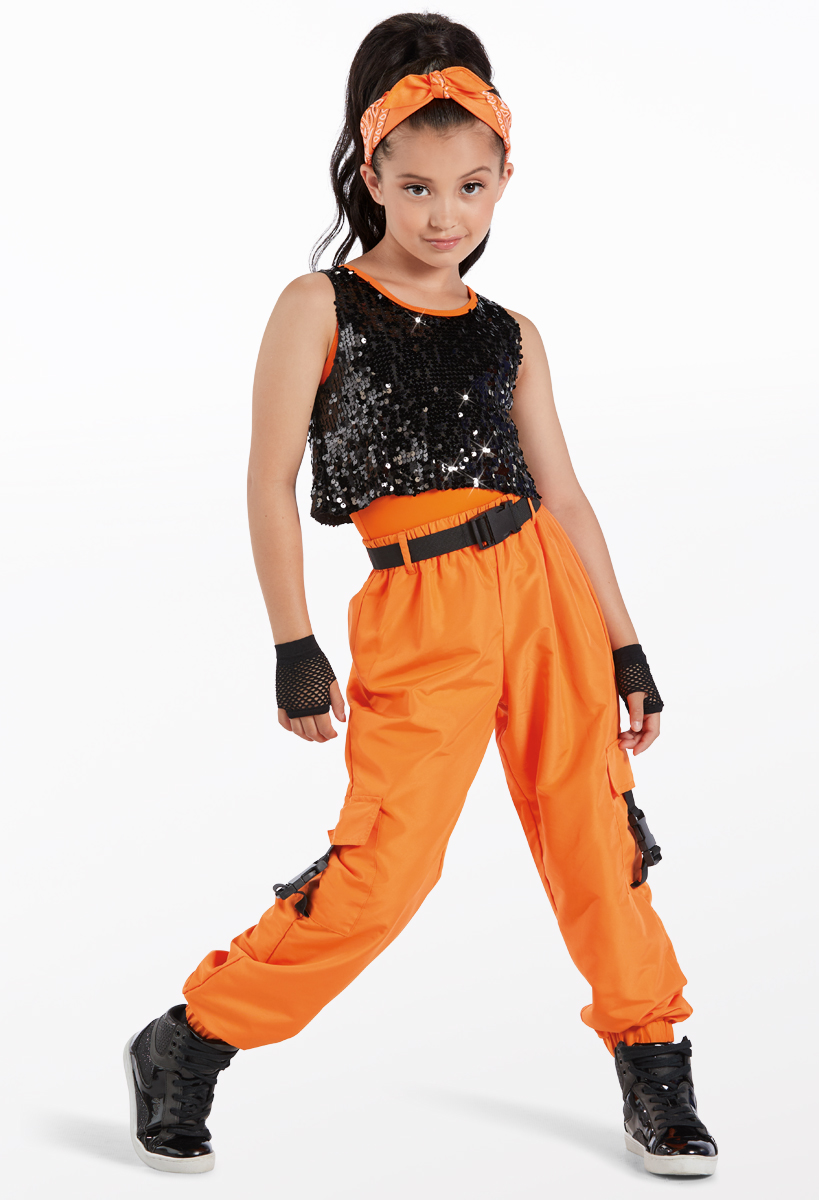
A decade ago, dance cargo pants were a niche piece worn primarily by hip-hop crews. Today they appear in jazz classes, contemporary intensives, choreographers’ warm-up sessions, and the post-rehearsal walk to the train. The shift reflects how modern dancewear has evolved: training styles have crossed over, choreographers expect dancers fluent in multiple vocabularies, and the line between studio and street has thinned. For dancers building a versatile wardrobe, dance cargo pants have moved from optional to essential. This guide explains why, what to look for in a quality pair, and where they fit in a serious dancer’s training week.
The Functional Case
Cargo pants solve several problems that other dance bottoms cannot. A loose, relaxed cut moves with the dancer through full range of motion without binding through the hip, knee, or ankle, which leggings sometimes do during deep grand pliés or floor work. A drawstring or elastic waist accommodates the changing fit dancers experience between morning and evening classes. Lightweight breathable fabric prevents overheating during long technique blocks and choreography sessions. And the side pockets, the distinguishing feature of the category, mean a dancer can carry a phone, keys, hair tie, or small water bottle between studios without juggling a bag.
The Cultural Case
The rise of cargo pants in dance also reflects the cultural pathways movement disciplines now travel. Hip-hop training has gone mainstream in studios that once focused only on ballet and jazz. Contemporary choreographers draw freely from street vocabularies. Music videos, social platforms, and concert tours have shaped a generation of dancers whose aesthetic references are as much streetwear as stagewear. A cargo pant reads as both functional dance gear and credible street fashion, which is exactly the dual identity many young dancers want their wardrobe to project.
Key Features That Set Dance Cargo Pants Apart
Not every cargo pant performs well in a studio. The differences are worth knowing before you buy:
- Fabric. Look for a lightweight cotton or technical blend with stretch and recovery. Heavy duck canvas or workwear-grade fabric, common in regular cargo pants, restricts movement and overheats during training.
- Cut. A relaxed, slightly tapered leg keeps fabric clear of the floor and the dancer’s feet during turns and floor work. Avoid wide, low-rise, or excessively baggy cuts that snag underfoot.
- Waistband. Drawstring or elastic construction allows fine-tuned adjustment for different body states across a long training day. Stiff structured waistbands belong on workwear, not dancewear.
- Pocket placement and depth. Side pockets should sit at thigh height with secure closure and shallow depth, so contents do not swing or fall during inversions and turns.
- Seam construction. Flat or reinforced seams reduce chafing during repetitive movement and survive the abuse of regular studio floor work.
- Ankle finish. A clean cuff, tapered hem, or built-in adjustment keeps the leg out of the way during pirouettes and footwork. Loose, frayed hems are a tripping hazard.
When to Wear Them in the Training Week
The cargo pant is most useful as a versatile training and warm-up piece, not as a technique-class garment for styles that require visible line work like ballet. Common appropriate uses include:
- Hip-hop and street-style classes, where the cut is both functional and stylistically expected.
- Contemporary and lyrical training, where loose, mobile bottoms support floor work and partnering.
- Warm-ups, to keep muscles warm before technique class.
- Choreography and rehearsal, where freedom of movement matters more than visible line.
- Conditioning and cross-training, where comfort and pocket utility help during longer sessions.
- Studio-to-street transitions, when one pant carries through the rest of the day.
Most dancers keep at least one quality pair in rotation alongside their technique-class bottoms.
Care and Longevity
Quality dancewear holds up when it is washed thoughtfully. Use cold water on a gentle cycle, skip fabric softeners (which break down elastane over time), and lay flat or hang to dry rather than tumbling on high heat. Turn pants inside out to protect surface color, particularly for darker or high-visibility colorways. With reasonable care, a well-constructed pair should hold its shape through several seasons of regular use.
Where to Find Performance-Quality Dance Cargo Pants
For dancers, parents, and studios looking for cargo pants engineered for studio use rather than retrofitted from streetwear, Tiger Friday offers cargo styles designed specifically for the demands of serious training. Browse the collection to find a fit, fabric, and colorway that match the dancer’s discipline, training schedule, and personal style.
