

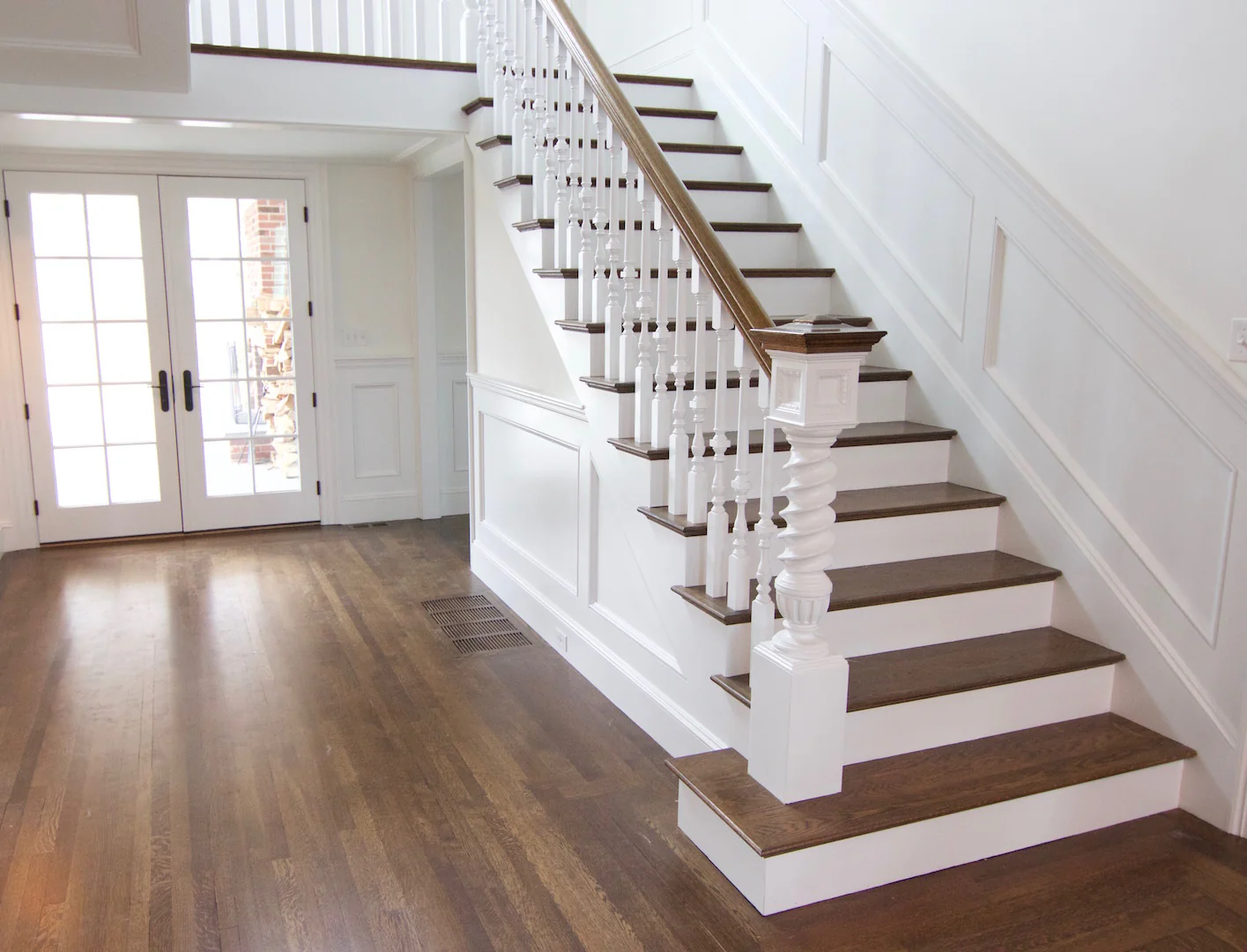
The specification conversation around hardwood stair treads has consolidated around white oak with a consistency that experienced flooring professionals have not seen behind a single species in recent memory. Across premium residential new construction, whole-home renovation, and targeted staircase upgrade projects, the client request for White Oak Stair Treads has moved from a recurring preference into a near-default specification that flooring dealers, remodeling contractors, and design professionals encounter across virtually every market segment they operate in. For trade professionals whose product knowledge and specification confidence directly influence project outcomes and client trust, understanding white oak stair treads at the depth the market now demands — across species performance, sawn profile selection, finish specification, and supplier quality evaluation — is a competitive necessity rather than a supplementary area of expertise.
Why White Oak Has Consolidated the Market
Understanding why white oak has achieved its current specification dominance is not simply an academic exercise. It is the foundation of the confident, technically grounded recommendation that trade professionals need to make when a client asks why white oak is the right choice — or when a budget conversation introduces pressure to substitute an alternative species.
The performance case begins with hardness. At 1,360 on the Janka scale, white oak delivers the wear resistance that stair tread applications demand in a way that softer, more visually fashionable alternatives cannot sustain across a realistic service life. Walnut — a species that carries strong aesthetic appeal in contemporary residential design — registers 1,010 on the Janka scale, a meaningful deficit in a stair tread application where concentrated heel strike loads follow consistent patterns across a narrow tread surface for decades. The aesthetic investment in a walnut stair tread begins to express itself as surface wear in high-traffic residential staircases at a rate that white oak does not approach under equivalent conditions.
The finishing case is built on grain structure. White oak’s closed, tyloses-filled grain accepts stain with a consistency and uniformity that open-grained species cannot match — and that the premium custom colour work increasingly demanded in residential design requires. A consistent stain penetration across the full width of every tread in a flight produces the colour uniformity that reads as resolved and intentional in a finished installation. The blotching and penetration inconsistency that open-grained species produce under custom stain applications produces a result that reads as a finishing problem regardless of the quality of the application technique.
The design case is built on versatility. White oak coordinates with the broad range of wall colours, cabinetry finishes, metal tones, and design palettes that contemporary residential interiors involve without the strong directional design commitment that species with more pronounced natural colour — walnut’s brown warmth, maple’s cool yellow undertone — require from the surrounding design context. A white oak tread installation reads appropriately in minimalist contemporary, transitional, traditional, and farmhouse interior styles with finish adjustments that do not require species substitution — which is why architects and interior designers have converged on it as a specification default rather than a style-specific choice.
Sawn Profile: The Decision Most Often Left to Default
The sawn profile specification for white oak stair treads is the variable that most directly influences the visual character of the finished installation — and the one most frequently defaulted to plainsawn availability without deliberate consideration of whether that profile serves the design intent of the project.
Plainsawn white oak produces the arching cathedral grain patterns that characterise traditional hardwood flooring and millwork. On a stair tread, plainsawn figure reads as warm, organic, and characterful — the natural movement of the grain contributing visual interest that suits traditional, transitional, and farmhouse interiors. The figure variation between individual plainsawn treads in a flight adds to the organic quality of the installation in design contexts where that variation is embraced. In design contexts where tight visual consistency across the flight is a priority, that same variation becomes a specification liability.
Quartersawn white oak — sawn at 60 to 90 degrees to the growth rings — exposes the medullary rays of the species as the pronounced linear ray fleck figure that has become one of the defining visual signatures of premium contemporary residential design. The ray fleck reads as architecturally refined and visually consistent across every tread in the flight in a way that plainsawn figure cannot replicate. Beyond its aesthetic contribution, quartersawn material’s dimensional stability advantage over plainsawn is a meaningful specification benefit in tread applications — the 60 to 90 degree orientation to the growth rings reduces tangential movement across the width of the tread under seasonal moisture cycling, which matters in single-piece treads spanning wide staircase openings in homes with significant seasonal humidity variation.
Rift-sawn white oak is the specification for installations where visual uniformity is the defining design priority above all other considerations. Produced at 30 to 60 degrees to the growth rings, rift-sawn material eliminates both the cathedral figure of plainsawn and the pronounced ray fleck of quartersawn, producing a linear, consistent grain pattern that reads as clean and uniform across every tread in the flight. The visual result is the most resolved and architecturally precise of the three profiles — and it commands a price premium that reflects the yield loss inherent in the cutting method. For architects and interior designers working in minimalist residential projects where material consistency is a non-negotiable design value, rift-sawn white oak treads are the specification that delivers that value without compromise.
Thickness and Dimensional Specification
White oak stair treads are available across a range of thickness specifications that carry both structural and visual implications worth understanding before making a recommendation to a client or specifying for a project.
Standard thickness specifications — typically one inch nominal for new construction applications and three-quarter inch for retrofit overlay installations — reflect the structural requirements of the application rather than simply material availability. A tread thickness that is appropriate for a new construction application where the tread spans between stringers on a structurally engineered carriage may be insufficient for an application where the tread overhangs a wider opening or carries a specific nosing profile requirement that reduces the effective thickness at the leading edge.
Nosing depth and profile specification interacts with tread thickness in ways that affect both the structural integrity of the nosing edge and the visual character of the finished tread. A thicker tread allows a more substantial nosing profile — a deeper return, a more pronounced overhang — that reads as more architecturally resolved at the leading edge of each step. A thinner tread constrains the nosing profile options and may require a applied nosing moulding to achieve the visual weight at the tread edge that the design intent requires.
Width specification requires site measurement rather than assumption. Staircase widths vary between projects and between individual steps within the same flight in ways that nominal width specifications do not accommodate without field verification. Treads specified to nominal width without site measurement verification frequently require field trimming that adds installation time and creates the risk of a width that falls short of the staircase opening at the point of installation.
Evaluating Supplier Quality for Trade Specification
The white oak stair tread market spans a quality range that is wider than the visual similarity of products across that range would suggest. Trade professionals who have experienced the downstream consequences of sourcing from suppliers whose quality consistency does not match their sales representation understand that supplier evaluation is a specification decision as consequential as species and finish selection.
Moisture content consistency is the quality variable most directly related to long-term installation performance. Treads delivered at moisture content outside the range appropriate for the installation environment will move after installation — gapping, cupping, or surface checking as they reach equilibrium with the ambient conditions of the space. A supplier whose quality control process includes moisture content verification and whose product is kiln-dried to consistent specifications reduces this risk to a manageable level. A supplier whose moisture content consistency is variable introduces a warranty and callback risk that the margin on the tread product does not compensate for.
Grade consistency across deliveries is the quality variable most directly related to the visual outcome of the installation. A tread specification that delivers consistent grain character, colour range, and figure type across every tread in a flight produces the visual cohesion that premium installations require. Grade inconsistency between deliveries — or within a single delivery — forces field selection decisions that add installation time and may require additional product to achieve the visual consistency the project demands.
Wood Stair Co supplies white oak stair treads across plainsawn, quartersawn, and rift-sawn profiles in prefinished and unfinished specifications — with moisture content standards, grade consistency, and finish quality built to the requirements of flooring dealers, remodeling contractors, homebuilders, and design professionals who need a supplier whose product performance matches the premium standard their clients expect from every installation.
