

Western saddles may look similar at first glance, but they are not all built for the same job. A saddle made for barrel racing will feel different from a ranch saddle. A roping saddle is built to handle pressure that a show saddle is not designed for. A trail saddle focuses more on comfort over time than speed or competition movement.
For new riders, understanding saddle styles can make the buying process much easier. Instead of choosing based only on tooling, color, silver, or price, riders can focus on how the saddle supports their horse, their seat, and their main riding goals.
Why Western Saddle Design Matters
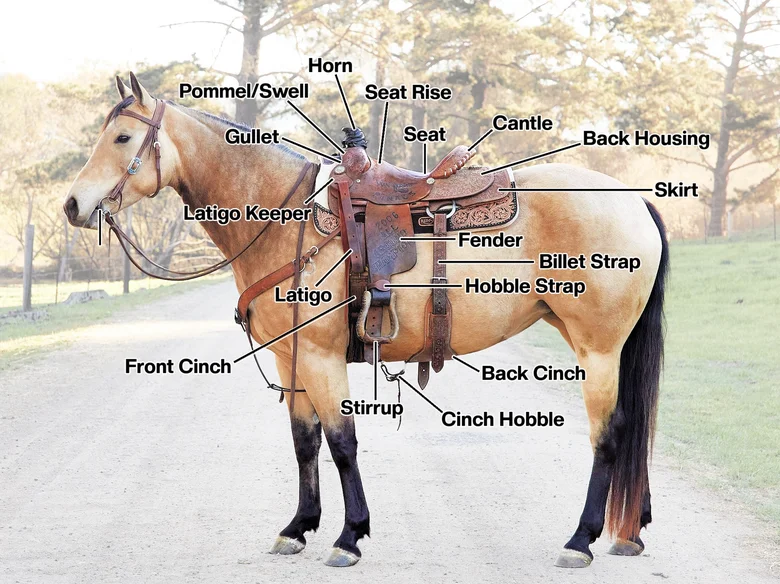
Every part of a western saddle affects how it performs. The horn, seat, cantle, fenders, skirt, rigging, and tree all play a role. Saddle Up Colorado’s western saddle guide explains key parts such as the horn, pommel, seat rise, seat, cantle, skirt, gullet, cinch, fenders, stirrups, and saddle strings, which all influence comfort, fit, and function.
A deep seat and higher cantle may help a rider feel more secure. A flatter seat may allow more freedom of movement. A stronger horn and tree may matter for roping. A lighter, compact design may matter for speed events.
The right saddle should match both the horse and the job. If it does not, even a good-looking saddle can feel uncomfortable or perform poorly.
All-Around Saddles
An all-around saddle is designed for riders who do a little bit of everything. It can be useful for trail riding, local events, light ranch work, pleasure riding, or general western use.
This type of saddle is often a practical choice for riders who do not want to buy a different saddle for every activity. It usually offers a balance of comfort, support, and function.
However, all-around does not mean perfect for every discipline. If you compete seriously in barrel racing, roping, cutting, or reining, a specialty saddle may serve you better.
Barrel Saddles
Barrel saddles are built for speed and sharp turns. They are usually lighter and more compact than many working saddles. A deeper seat and higher cantle can help the rider stay secure when rounding barrels.
These saddles are not meant for roping. Their horns are often designed for grip, not heavy pulling. For barrel racers, the main priorities are balance, rider security, horse freedom, and a saddle that stays in place during fast movement.
Ranch and Ranch Cutting Saddles
Ranch saddles are built for long hours and practical work. They are usually heavier, stronger, and made for daily use. Riders often use them for cattle work, long rides, and ranch tasks.
Ranch cutting saddles blend some of the agility of a cutting saddle with the durability needed for ranch work. Saddle Up Colorado’s guide describes ranch cutting saddles as useful for both cutting competitions and day-to-day cattle handling, with features such as a sturdy tree, back cinch, thicker horn, long skirts, and a flatter seat.
These saddles are useful for riders who need both movement and strength.
Roping Saddles
A roping saddle is built to handle pressure. It usually has a strong tree, reinforced horn, heavy-duty rigging, and a secure structure. These features help the saddle handle the force involved in roping and dallying.
Because of this construction, roping saddles are often heavier than other western saddles. The extra weight can be worth it for riders who need strength, but it may not be ideal for a casual trail rider.
Reining and Cutting Saddles
Reining saddles are built for precision. They allow riders to use subtle cues during spins, stops, and controlled maneuvers. A lower horn, flatter seat, and close-contact feel can help with rider movement.
Cutting saddles are built to let the horse move quickly while the rider stays balanced. They often have a flatter seat, lower cantle, and taller horn. This helps the rider stay out of the horse’s way during quick direction changes.
Both styles are highly useful in their disciplines, but they may not be the best everyday choice for every rider.
How to Choose the Right Style
Start by asking what you will do most often. Trail riding, ranch work, barrel racing, roping, reining, cutting, and showing all place different demands on a saddle.
Next, think about horse fit. Tree width, gullet clearance, bar angle, skirt length, and shoulder movement matter. Rider fit is also important. Seat size, leg position, cantle height, and balance affect comfort and control.
For a deeper breakdown of the types of western saddles, Saddle Up Colorado offers a helpful guide that explains common saddle styles and what each one is designed to do.
Final Thoughts
Western saddles are built with purpose. A barrel saddle, ranch saddle, roping saddle, and trail saddle may all look western, but each one supports a different kind of riding.
Before buying, learn how the saddle’s design affects your horse, your seat, and your riding goals. Visit Saddle Up Colorado to read their western saddle guide and compare the saddle style that best fits your needs.
