

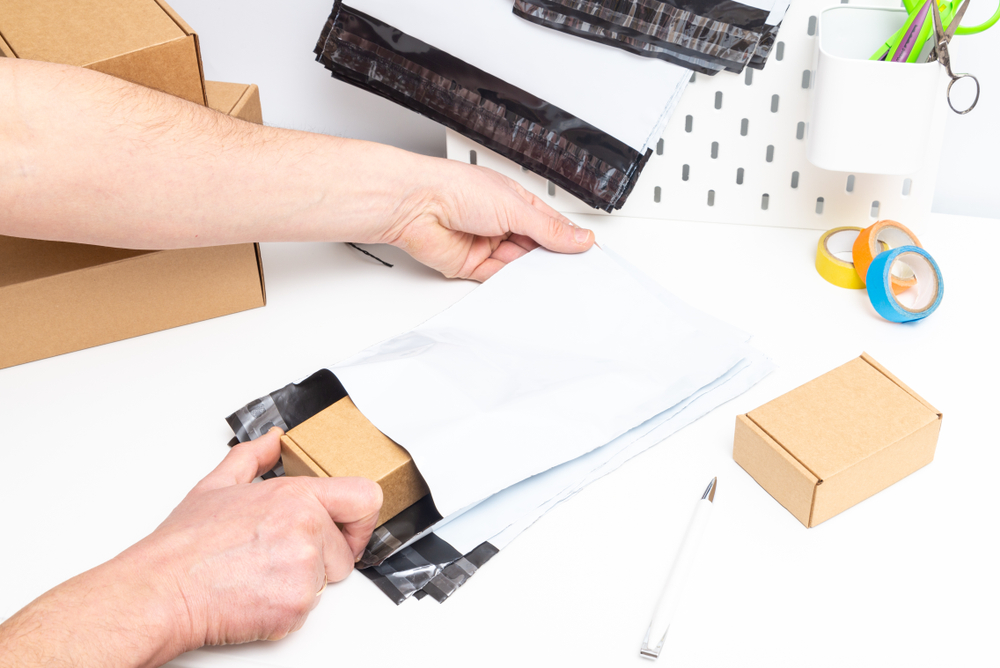
When it comes to packaging, choosing between poly bubble mailers and traditional boxes can directly impact your shipping costs, product safety, and customer experience. Whether you’re running an eCommerce store, shipping corporate gifts, or sending personal parcels, the right packaging decision isn’t just about protection—it’s about efficiency and branding too.
In this detailed guide, we’ll break down the differences, advantages, drawbacks, and best use cases for both options so you can confidently decide which works best for your shipping needs.
Understanding Poly Bubble Mailers
Poly bubble mailers are lightweight envelopes made from polyethylene material with a bubble wrap lining inside. This built-in cushioning helps protect items from minor impacts during transit.
They are commonly used for:
- Small, non-fragile items
- Soft goods like clothing
- Lightweight products such as accessories or documents
Key Features
Poly bubble mailers are:
- Lightweight and flexible
- Water-resistant
- Self-sealing with adhesive strips
- Cost-effective for shipping
Understanding Shipping Boxes
Boxes, typically made from corrugated cardboard, are the traditional packaging solution for shipping a wide variety of items.
They are ideal for:
- Fragile products
- Heavy items
- Bulk shipments
- High-value goods
Key Features
Shipping boxes offer:
- Strong structural integrity
- Stackability
- Custom sizing options
- Better protection for delicate items
Poly Bubble Mailers vs Boxes: Key Differences
1. Protection Level
Boxes clearly outperform mailers when it comes to protection. Their rigid structure shields items from crushing, bending, and impact damage.
Poly bubble mailers, while cushioned, are better suited for items that can handle slight pressure or movement.
Verdict:
- Fragile items → Boxes
- Durable, non-breakable items → Poly bubble mailers
2. Shipping Costs
One of the biggest advantages of poly bubble mailers is cost savings. Their lightweight design reduces shipping fees, especially for businesses shipping in high volumes.
Boxes, on the other hand, add both weight and dimensional volume, which increases shipping costs.
Verdict:
- Budget-friendly shipping → Poly bubble mailers
- Cost is less of a concern → Boxes
3. Space Efficiency
Poly bubble mailers take up less storage space and can easily conform to the shape of the product. This makes them ideal for businesses with limited storage.
Boxes require more storage and often come in fixed sizes, which may lead to unused space inside.
Verdict:
- Limited storage → Poly bubble mailers
- Warehouse setup → Boxes
4. Ease of Use
Poly bubble mailers are extremely convenient. Just insert the item, peel, and seal—no tape or assembly required.
Boxes require folding, taping, and sometimes additional cushioning materials like packing peanuts or air pillows.
Verdict:
- Quick packing → Poly bubble mailers
- More secure packing → Boxes
5. Branding Opportunities
Boxes offer more surface area for branding, making them a better choice for creating a premium unboxing experience.
While poly bubble mailers can be printed with logos or colors, they provide less room for elaborate branding.
Verdict:
- Premium branding → Boxes
- Simple branding → Poly bubble mailers
6. Environmental Impact
Both options have environmental considerations:
- Poly bubble mailers are made from plastic but some are recyclable or made from recycled materials
- Boxes are biodegradable and widely recyclable
However, boxes often require additional packing materials, which can offset their eco advantage.
Verdict:
- Eco-conscious (with proper recycling) → Boxes slightly ahead
- Minimal material use → Poly bubble mailers
When to Use Poly Bubble Mailers
Poly bubble mailers are the smarter choice when you’re shipping:
- Clothing and fabrics
- Jewelry and small accessories
- Books (paperbacks)
- Documents
- Non-fragile electronics accessories
They are especially useful for:
- eCommerce brands looking to reduce shipping costs
- High-volume shipping operations
- Subscription-based businesses
When to Use Boxes
Boxes are ideal for:
- Fragile items like glassware or ceramics
- Electronics and gadgets
- Bulk orders
- Heavy products
- Luxury or premium items
They are best suited for:
- Businesses focused on product safety
- High-value shipments
- Brand-heavy unboxing experiences
Cost Comparison: A Practical Perspective
From a purely financial standpoint:
- Poly bubble mailers reduce both packaging and shipping costs
- Boxes increase costs due to weight, size, and additional materials
However, damaged products from poor packaging can cost more in returns and replacements. So the cheapest option isn’t always the best.
Customer Experience Matters
Packaging plays a key role in how customers perceive your brand.
Poly bubble mailers deliver:
- Convenience
- Simplicity
- Minimal waste
Boxes deliver:
- A premium feel
- Better product presentation
- Enhanced protection
If your brand relies heavily on presentation (like gift baskets or luxury items), boxes are often worth the investment.
Hybrid Approach: The Smart Strategy
Many businesses don’t choose one over the other—they use both strategically.
For example:
- Use poly bubble mailers for low-cost, non-fragile items
- Use boxes for fragile, high-value, or bulk shipments
This approach balances cost efficiency with product safety.
Final Verdict: Which Is Better?
There’s no one-size-fits-all answer.
- Choose poly bubble mailers if your priority is cost savings, speed, and shipping lightweight, durable items.
- Choose boxes if protection, presentation, and handling fragile products matter more.
Ultimately, the best packaging solution depends on what you’re shipping, your budget, and the experience you want to deliver.
Conclusion
The debate between poly bubble mailers and boxes isn’t about which is universally better—it’s about which is better for your specific needs. By understanding the strengths and limitations of each, you can optimize your shipping strategy, reduce costs, and improve customer satisfaction all at once.
If you’re running a growing business, experimenting with both options and analyzing return rates, shipping costs, and customer feedback will help you refine your packaging decisions over time.
