

A burst pipe, an overflowing washing machine, a backed-up drain or a leaky roof can turn an ordinary day upside down. Water travels fast, and panic usually follows close behind.
Most people reach for a mop and every towel in the linen closet. It’s a smart first move, but it only handles what’s in plain sight.
What you can’t see is usually what costs the most.
Looking Past the Puddle
Mopping a floor clears away the water sitting on top of it. Meanwhile, much of the leak may have already traveled into the drywall, subfloor, insulation and wooden studs behind your walls.
Think of those materials as a kitchen sponge. They pull water in quickly but give it up slowly. A wall can look perfectly fine while the inside stays soaked for a long time.
Left alone, that trapped water slowly eats away at your home. Gypsum board turns soft and starts to crumble. Lumber can swell, twist, split and lose strength. Paint can blister, trim can loosen, flooring may feel spongy underfoot and a stale, musty smell can settle into the room.
Then there’s mold, which thrives in damp, dark corners. The Environmental Protection Agency urges homeowners to get wet materials dry without delay to keep it from taking hold.
Structural drying tackles the whole problem. A restoration crew pulls water out of the house itself, layer by layer, until the framing is back to normal.
Tracking Down Hidden Moisture
A good drying plan starts with knowing where the water traveled. Without that, a crew might rip out a perfectly sound wall or overlook a soggy corner that later grows mold.
Thermal cameras give technicians a head start. Wet surfaces tend to read cooler than their surroundings, so the camera’s screen can highlight suspicious areas behind drywall, beneath flooring, inside cabinets and over ceilings.
These cameras read temperature, not water, so technicians follow up with handheld meters that measure moisture directly. Some meters simply press against the surface, no cutting required.
Using both tools, crews can outline the wet zones, avoid needless demolition, check progress as the job moves along and document everything for your insurer.
The team you hire shapes how all of this turns out. Choosing an experienced, trusted restoration team such as Eastern Diversified Services, which has handled water damage in southeastern Pennsylvania for decades, means trained technicians arrive with the right equipment from the start. When comparing companies, ask about certifications, after-hours response, how they keep you updated and whether they work directly with insurance adjusters.
Rescuing Floors and Carpets
With the wet areas identified, crews set up their drying equipment.
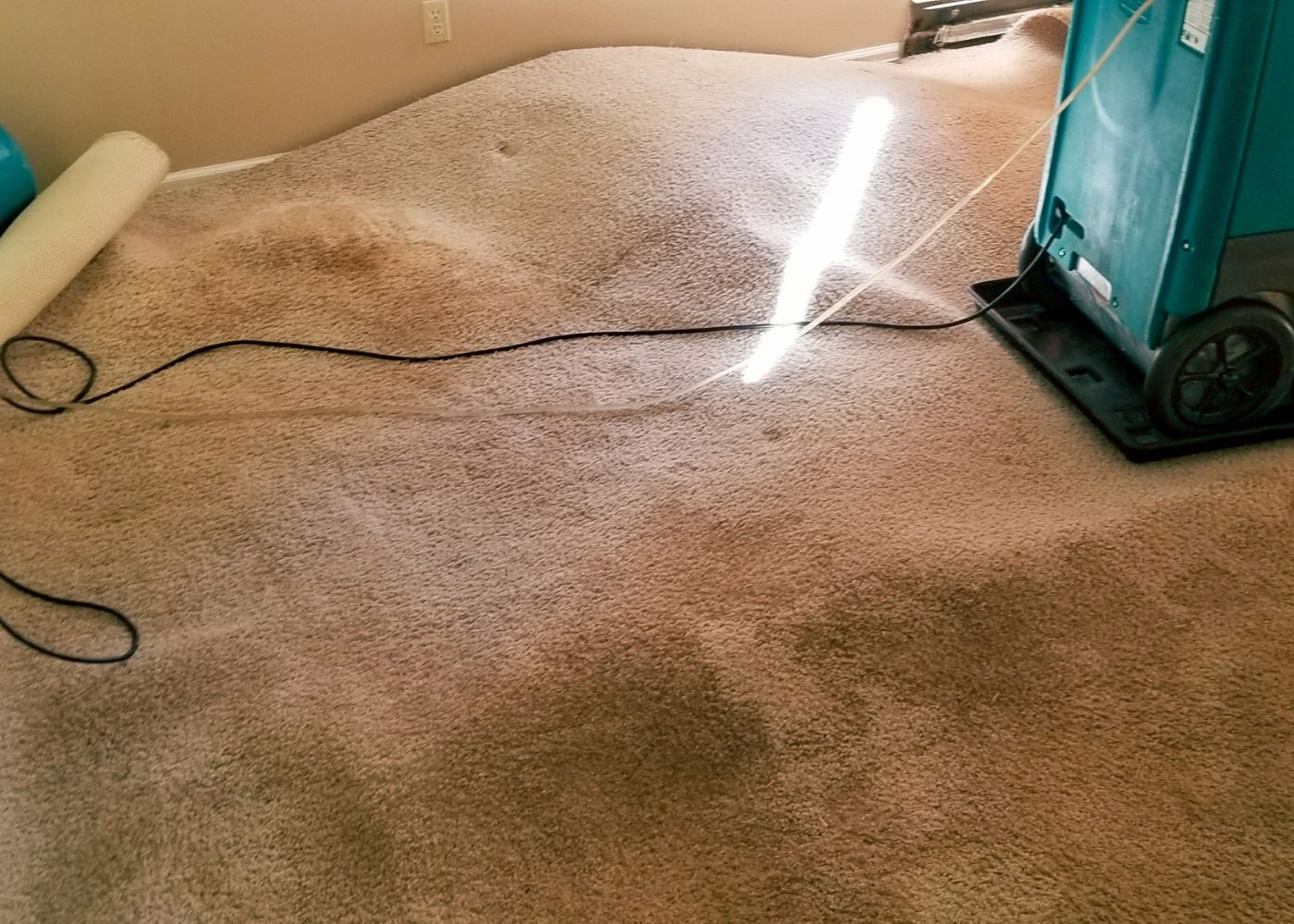
The fans used in restoration work look nothing like the box fan in your bedroom. These compact, high-velocity blowers sit low to the ground and blast air across carpet, hardwood, baseboards and the lower part of walls, pulling moisture out of each surface.
That moisture doesn’t just disappear. Large dehumidifiers capture it from the air and drain it away, so the room keeps getting drier instead of muggier. Run side by side, the blowers and dehumidifiers can accomplish in days what open windows might never manage.
Wood flooring is especially sensitive. As planks take on water, their edges can rise, their centers can hump up, gaps can open and some boards may even pop loose. Restoration crews have specialized mats and panels that draw water up through the boards and out of the subfloor. Caught early, a hardwood floor often survives.
Whether carpet can be saved depends on the source of the leak and how long it sat. Water from a broken supply line is relatively clean. Water from a flooded river or a backed-up toilet is not, and anything it touches usually needs replacing.
Responding Quickly After a Leak
Speed makes a big difference with water damage. Until help arrives, a few simple moves can limit the harm.
If it’s safe, close the main water valve, switch off the breaker for wet rooms, carry furniture and keepsakes somewhere dry and snap photos of everything for your insurer.
Then hand the job to people who do this every day. With the right equipment and a clear plan, a soggy disaster can become a fixable problem, and your home can feel like home again.
