

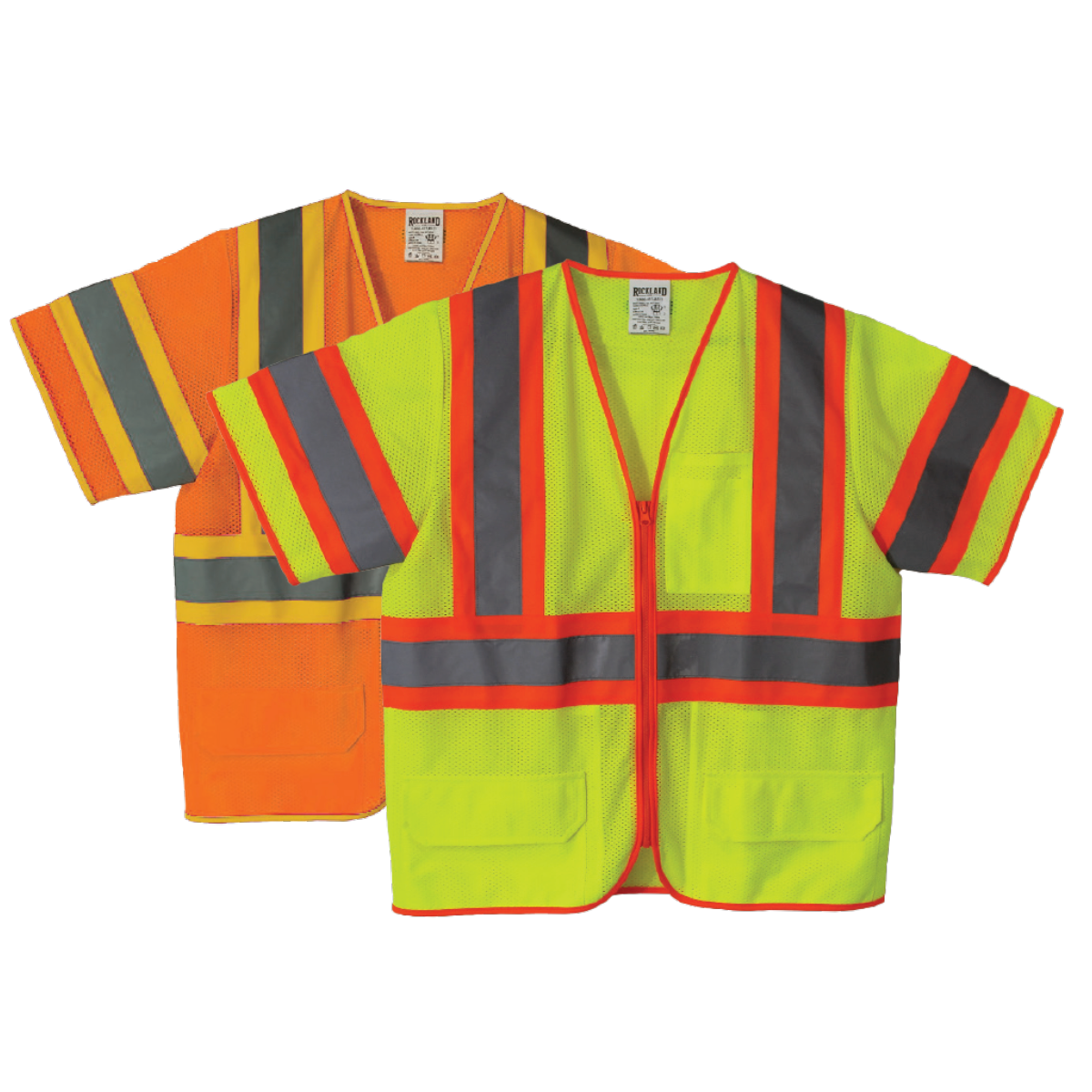
Not all high-visibility garments carry the same level of protection, and the distinction matters most precisely in the conditions holiday installation crews and seasonal facility operations encounter most frequently — low light, active vehicle traffic, and environments where workers may not be immediately visible to approaching drivers and equipment operators. A Class 3 safety vest represents the highest performance tier defined by ANSI/ISEA 107, requiring the greatest quantity of background fluorescent material and retroreflective striping of any vest classification available. For commercial decorators, facility managers, and warehouse operators managing peak-season operations, understanding precisely when Class 3 is required — and how to specify it correctly for seasonal crew deployment — is a foundational safety management decision.
What ANSI Class 3 Actually Requires
ANSI/ISEA 107 organizes high-visibility safety apparel into three performance classes based on the amount of fluorescent background material and retroreflective striping a garment must incorporate to achieve certification at each level.
Class 3 sits at the top of that scale. It requires a minimum of 1,240 square centimeters of fluorescent background material in approved colors — yellow-green or orange-red — and a minimum of 310 square centimeters of retroreflective material arranged to maximize detection from multiple approach angles. Unlike Class 2, which covers the torso only, Class 3 requires arm coverage as well — a meaningful distinction for worker detection at distance and in low ambient light conditions where peripheral visibility is reduced.
This expanded coverage produces visibility that holds at greater distances, in lower light, and under the distracted driving and weather conditions that characterize the environments where Class 3 is the standard.
When Class 3 Is Required Rather Than Simply Preferred
Understanding when Class 3 is the mandated specification — rather than an optional upgrade — is essential for managers making compliant PPE decisions for seasonal and installation crews.
Class 3 is required when workers are exposed to traffic operating at highway speeds, in low-visibility conditions where detection distance is critical to safety, or when the work itself requires workers to turn away from approaching traffic or equipment during normal operations — a routine occurrence during installation and setup tasks.
For holiday installation and seasonal facility operations, Class 3 applies during early morning or evening work in insufficient daylight; during rain, fog, or snow conditions that significantly reduce driver sight lines; in parking lots and roadway-adjacent environments where vehicle traffic is present; and in receiving, loading, and logistics areas where forklift and delivery vehicle traffic operates at variable and unpredictable speeds. The overlap between these conditions and standard December operating environments is substantial across virtually every installation and seasonal facility context.
Why Vests Are Often the Right Choice for Holiday Installation Fleets
Safety vests offer practical advantages over full garments that make them a preferred fleet choice for commercial decorators and facility managers equipping large seasonal crews within defined procurement budgets.
The primary advantage is layering flexibility. A Class 3 compliant vest worn over any base layer — a heavy winter coat, a thermal work shirt, or a standard crew uniform — delivers compliant visibility coverage without constraining the underlayer choice. Workers adjust thermal protection to the conditions of a given workday while the vest maintains consistent compliance regardless. For holiday installation work where morning temperatures require heavy layering and afternoon conditions may be considerably warmer, this flexibility has direct operational value across a full workday.
Vests also produce meaningful fleet economics. At a lower per-unit cost than insulated jackets, they allow organizations to equip larger installation crews within seasonal procurement budgets while achieving identical ANSI class compliance across the full team.
Specifying Class 3 Vests for Installation and Seasonal Use
Several specification details beyond ANSI class designation determine how well a Class 3 vest performs in practice across a full installation season.
Retroreflective tape quality — specifically its rated brightness and performance retention through repeated commercial laundering — is a meaningful differentiator between garments at similar price points. Higher-grade reflective materials maintain detection performance over more washing cycles, directly affecting the ongoing compliance value of fleet garments reused across multiple installation seasons.
Breakaway closure construction is a relevant safety feature in environments where snagging risk exists near scaffolding components, installation rigging, or equipment. A vest that releases under tension rather than restraining a worker is a functionally important specification in elevated and close-quarter installation contexts, not a premium add-on.
Sizing range across a diverse crew, pocket placement that avoids displacing retroreflective elements, and compatibility with radio and device clip-on accessories complete the practical checklist for fleet specification at commercial scale.
Warehouse, Loading Dock, and Event Venue Applications
The Class 3 specification applies meaningfully to the warehouse and venue operations that underpin holiday season logistics alongside field installation crews.
Seasonal receiving operations — where inventory volumes surge sharply in the weeks before major holidays — involve warehouse and receiving staff working alongside forklifts, pallet jacks, and delivery vehicles in dock areas where collision risk is elevated significantly above baseline. Class 3 vest standardization for receiving dock and inventory workers provides the visibility performance appropriate for that mixed-equipment environment.
Large event venues managing holiday and seasonal displays in public-accessible spaces — where guest pedestrian traffic and service vehicle movement coexist — benefit from Class 3 standardization for grounds and installation crews. Consistent, visually uniform compliance across a crew working in a client-facing environment also communicates a professional safety standard to venue operators and event clients.
Apply the Right Standard Consistently, Not Occasionally
Class 3 high-visibility protection is the correct specification when the combination of traffic exposure, light conditions, and work environment creates a visibility demand that lower classifications were not designed to meet. For commercial decorators, professional installation teams, and facility managers overseeing peak-season operations, applying this standard consistently across crew deployments — not as a situational upgrade but as the baseline for any crew working in these conditions — is what operational safety compliance genuinely requires.
National Safety Gear carries a comprehensive selection of ANSI Class 3 safety vests suited to professional installation crews, seasonal warehouse operations, and large-scale facility management. Visit their website to explore compliant options configured for your crew size, operational context, and seasonal procurement requirements.
