

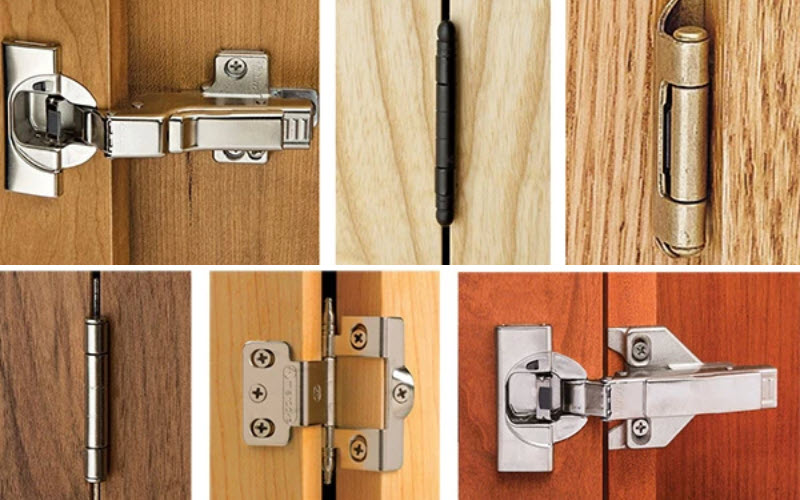
Selecting the correct hinge for a cabinet door can seem straightforward until you discover that hinge size involves more than simply measuring the door. Cup diameter, door thickness, overlay, mounting plate, opening angle, and cabinet construction can all affect compatibility. Choosing the wrong combination can lead to uneven gaps, doors that rub against one another, or hinges that cannot be adjusted properly.
Understanding these measurements before purchasing hardware makes cabinet installation and replacement much easier. Most modern European-style cabinet hinges use a 35 mm cup, but smaller and larger options are also available for specific applications.
What Does Concealed Hinge Size Mean?
The term “hinge size” can be misleading because a cabinet hinge does not have just one measurement. A typical concealed hinge consists of a cup installed into the back of the door, an arm connecting the cup to the cabinet, and a mounting plate attached to the cabinet.
When selecting Concealed hinges, you need to consider several measurements rather than relying only on cup diameter. The most important factors are cup size, cup depth, door thickness, overlay, mounting plate compatibility, and opening angle.
The 35 mm Cup Is the Most Common Size
For most standard kitchen and furniture cabinet doors, the 35 mm concealed hinge cup is the usual choice. The cup fits into a circular recess bored into the back of the door.
If you are replacing an existing hinge, measuring the existing cup is one of the easiest ways to determine the required size. A 35 mm cup is common, while 26 mm cups are generally used for smaller or thinner doors. Some specialized hinges also use larger cups for particular thick-door applications.
However, a 35 mm cup does not automatically mean that every 35 mm hinge will work with your cabinet. The remaining measurements still need to match.
How to Measure Your Cabinet Door
Before buying a replacement hinge, gather a few basic measurements. A tape measure, ruler, and preferably a set of calipers can make the process more accurate.
Measure the Door Thickness
Start by measuring the thickness of the cabinet door from the front surface to the back surface. This is particularly important when working with thin doors because the hinge cup is recessed into the material.
Many standard hinges accommodate common cabinet-door thicknesses, but the acceptable range varies between hinge designs. Some hinges are designed for thinner doors, while others can accommodate considerably thicker panels.
Never assume that a hinge is suitable simply because its cup diameter matches the existing hole.
Measure the Cup Diameter
If the door already has a hinge hole, measure across the circular recess. A measurement close to 35 mm indicates a standard full-size cup hinge.
If the cabinet uses a smaller cup, do not enlarge the hole simply to accommodate a different hinge unless the door construction and manufacturer’s specifications allow it. Changing the cup size can weaken a narrow door stile or interfere with decorative details.
Check the Cup Depth
Cup depth is another important consideration. The recess must be deep enough for the hinge cup but not so deep that it risks breaking through the front of the door.
Common hinge designs use cup depths around 11.5 to 13 mm, although exact requirements vary by manufacturer and model.
For a new installation, always follow the boring depth specified for the particular hinge rather than relying on a general measurement.
Determine the Door Overlay
Overlay is one of the most important measurements when selecting a concealed hinge.
It describes how much the closed cabinet door extends over the cabinet side or frame. Cabinet doors generally fall into three configurations: full overlay, half overlay, and inset.
Full Overlay
A full-overlay door covers most or all of the cabinet side or frame. This arrangement is common in modern frameless cabinetry.
A full-overlay hinge has an arm designed to position the door appropriately over the cabinet edge. The exact overlay depends on the hinge geometry and mounting plate combination.
Half Overlay
Half-overlay hinges are commonly used when two doors share a cabinet partition. Each door covers part of the available cabinet-side area.
These hinges are sometimes described as half-crank or twin-application hinges. Using a full-overlay hinge in this situation can cause the two doors to interfere with each other.
Inset
An inset door sits inside the cabinet opening instead of covering the cabinet edge. This requires a hinge designed specifically for inset applications.
Because the reveal around an inset door is visible, accurate installation and adjustment are particularly important.
Don’t Forget the Mounting Plate
The mounting plate connects the hinge arm to the cabinet. Its dimensions and position influence the final position of the door.
Two hinges may have identical cup diameters but require different plates or plate heights to achieve the desired overlay. Therefore, when replacing hinges, inspect the existing mounting plate rather than assuming the new hinge will automatically fit it.
Compatibility between the hinge arm and mounting plate is also important because different manufacturers can use different connection systems.
What Opening Angle Do You Need?
Cabinet hinges are also identified by their opening angle. Around 110 degrees is common for many standard cabinet applications, while wider-opening hinges are available for specialized cabinets.
A wider opening can be useful for corner cabinets or situations where greater access to the cabinet interior is needed. Conversely, a restricted-angle hinge may be preferable where nearby walls, appliances, or doors limit movement.
Think about how the door needs to operate before choosing the hinge.
What Size Hinge Is Best for a Standard Cabinet Door?
For a typical modern cabinet door, a 35 mm concealed hinge is often the starting point. However, the correct choice should also match the door thickness, overlay, mounting plate, and required opening angle.
A useful selection process is:
- Measure the existing cup diameter.
- Measure the door thickness.
- Check the cup-boring depth.
- Determine whether the door is full overlay, half overlay, or inset.
- Identify the mounting plate.
- Select the required opening angle.
- Check the hinge’s weight and door-size specifications.
- Test one hinge before purchasing a complete set.
This approach is much safer than ordering a hinge based solely on the phrase “35 mm.”
Common Concealed Hinge Sizing Mistakes
Choosing Only by Cup Diameter
A 35 mm cup may fit the hole but still have the wrong arm geometry or mounting plate for the cabinet.
Ignoring Door Thickness
A hinge designed for a particular thickness range may not work properly on an unusually thin or thick door.
Measuring Overlay Incorrectly
Overlay should be measured with the door closed and positioned normally. Guessing the overlay can result in doors that sit too far forward, too far back, or collide with neighboring doors.
Mixing Incompatible Components
Replacing the hinge while retaining an incompatible mounting plate can create alignment problems. Check the connection system before combining components from different hinge ranges.
Drilling Without Checking Depth
When installing new hinges, drilling too deeply can damage the door. Always use the manufacturer’s recommended boring depth and test the setup on scrap material when possible.
How Many Hinges Does a Cabinet Door Need?
The number of hinges depends on the door’s height, weight, material, and hinge manufacturer’s recommendations. Small and lightweight doors may need fewer hinges, while tall or heavy doors generally require additional support.
Instead of choosing hinge quantity based only on appearance, consider the actual load and dimensions of the door. A properly supported door will be easier to align and less likely to sag over time.
A Simple Hinge Selection Checklist
Before placing your order, make sure you know:
- Cup diameter: commonly 35 mm
- Cup depth: check the specific hinge specification
- Door thickness: measure the actual door
- Overlay: full, half, or inset
- Mounting plate: confirm compatibility
- Opening angle: select according to cabinet requirements
- Hinge type: standard, soft-close, or another specialized design
- Door weight and size: make sure the hinge is appropriately rated
These measurements provide a much more reliable basis for selecting replacement or new Concealed hinges.
Final Thoughts
Choosing the correct concealed hinge is really a matter of matching several measurements rather than finding one universal “size.” For many standard cabinet doors, the 35 mm cup is the logical starting point, but door thickness, cup depth, overlay, mounting plate, and opening angle ultimately determine whether a particular hinge will work.
Taking a few minutes to measure the existing cabinet carefully can prevent misaligned doors, unnecessary drilling, and repeated hardware purchases. When in doubt, compare your measurements with the hinge manufacturer’s installation specifications before making permanent holes in the cabinet door.
