

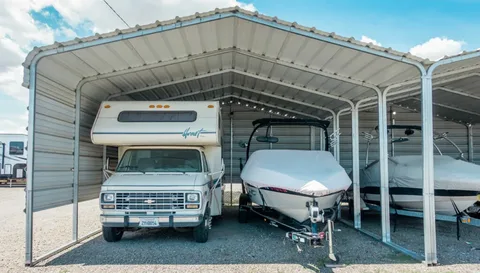
Modern recreation vehicles are wider, taller, and mechanically more complex than ever. Storage facilities that weren’t built for size upgrades now struggle to fit slide-outs, roof additions, and high-clearance suspensions. The best facilities account for these changes long before a vehicle pulls through the gate, turning oversized storage into an engineered process instead of a parking gamble.
Facility Layouts Built to Turn Wide Rigs Without Scraping Corners
Oversized campers and boats don’t corner like cars. Facilities designed for big rigs map their interior flow with wide-arc turns that allow a driver to maneuver without sharp pivots. Instead of 90-degree choke points, aisles curve naturally to match towing angles, reducing blind strain and eliminating the accidental scrape down metal siding that happens when buildings aren’t spaced correctly.
The layout also factors in approach depth, so a driver can swing out without needing reverse corrections. Many owners don’t consider turning radius until they experience it firsthand. The best layouts prevent stressful micro-adjustments and give vehicles room to roll in the same motion they rolled off the road.
Ceiling Clearance That Fits Extended RV Profiles and Raised Suspensions
Oversized storage isn’t just about width—it’s vertical space. Today’s campers include roof air units, satellite domes, solar arrays, and expanded suspension kits that raise profiles much higher than factory measurements suggest. High-clearance storage barns or enclosed bays factor in added inches beyond standard manufacturer specs so equipment clears without risking damage.
Lifting a vehicle for off-road use can easily add 4–8 inches of height. Storage with low or flat clearance creates friction points at entryways, exit ramps, and ceiling beams. Proper clearance planning keeps modifications intact, prevents roof contact, and removes the nerve test of inch-by-inch roll-ins.
Slot Spacing Designed for Open Slide-outs Without Crowding Neighbors
Slide-outs are now standard, not optional, and storage that ignores them underestimates real width by several feet. Facilities built for modern RV storage units calculate space based on slides being deployed for access, maintenance, or seasonal prep. This prevents the sidewall conflict that happens when units are parked door-to-door like compact cars.
Power cables, utility bins, and entry steps also claim lateral space once a vehicle is positioned. Thoughtful slot spacing ensures owners can work on their camper interior without stepping into another resident’s storage zone. It’s not about fitting—it’s about usable, functional room.
Drive Lanes Sized for Trailered Boats and Oversized Campers to Roll Through
Trailers add a unique challenge: pivot delay. Boats and campers on trailers track wider and pivot slower than the towing vehicle pulling them. Facilities that plan only for vehicle width fail to account for trailer sway and axle offset that increase turning footprints in tight lanes.
Generous lane sizing eliminates the need for incremental inching. Drivers can move straight through without watching mirrors like landing gear. Wide lanes also help on departure days when angles change with traffic, weather conditions, or limited visibility during early morning or evening returns.
Roof Coverage That Shields Tall Equipment from Long Seasonal Exposure
Height means increased exposure. The tallest surfaces on any camper or boat—rubber roofing, vents, seals, awning fabric, solar panels—take the most weather damage when stored outdoors. Roof-covered storage protects areas that degrade fastest from sun, moisture, and seasonal heat cycling. Long-term exposure accelerates fade, chalking, caulk breakdown, and heat stress along seams. A covered environment preserves materials that are expensive to replace and often a challenge to source mid-season. Equipment stored high and dry ages slower and performs longer, even when stored for months at a time.
Door Heights and Unit Points That Match Large Hitch and Antenna Clearance
Entry height must account for more than the roofline. Hitch mounts, antennas, backup cameras, tail-ladder systems, and clearance lights often sit at the highest and lowest points of a recreational vehicle. Units built without accommodating these details force risky last-second adjustments.
Awareness of low-hang and high-hang collision points protects equipment owners depend on. Clearance tech isn’t optional when someone stores a fifth wheel with a raised receiver or a mirrored antenna system that extends past stock height. These measurements need to exist before a vehicle ever pulls forward.
Space Allotments Made for Hitch Length and Rear Clearance
Length doesn’t stop at the rear bumper. When a camper is hitched, total footprint extends past tongue length, stabilizers, safety chains, and rear storage racks carrying bikes, coolers, or recovery gear. Correct space allotment ensures the entire footprint fits without unhooking prematurely or hanging into drive lanes. Backup distance also needs planning. Longer rigs need more travel room to align without jackknifing. Storage stalls built short create backup bottlenecks, while well-measured spaces allow straight alignment with minimal repositioning.
Load-friendly Floors That Carry Heavy Axle Weights Safely
An oversized camper or loaded fishing boat carries equal weight through fewer axles, creating heavy pressure points on storage surfaces. Flooring must resist tire divots, sinking, surface cracks, and water pooling that forms under inconsistent weight load. Load-rated concrete and graded floors provide long-term durability and vehicle stability.
Weight behavior changes when rigs sit for weeks or months. Tires settle into softer ground, fluids redistribute, and suspension compresses. A stable, load-rated floor protects tires, frames, leveling jacks, and axle alignment with none of the ground shift some outdoor lots create.
Owners searching storage units near me that genuinely support large recreational setups often discover that space dimensions alone don’t tell the full story. Design, clearance logic, lane engineering, and weight-rated infrastructure determine whether oversized storage works long-term. For those who want covered space that respects modern vehicle scale and handling, Storage Partner provides options built for today’s larger campers and trailers.
