

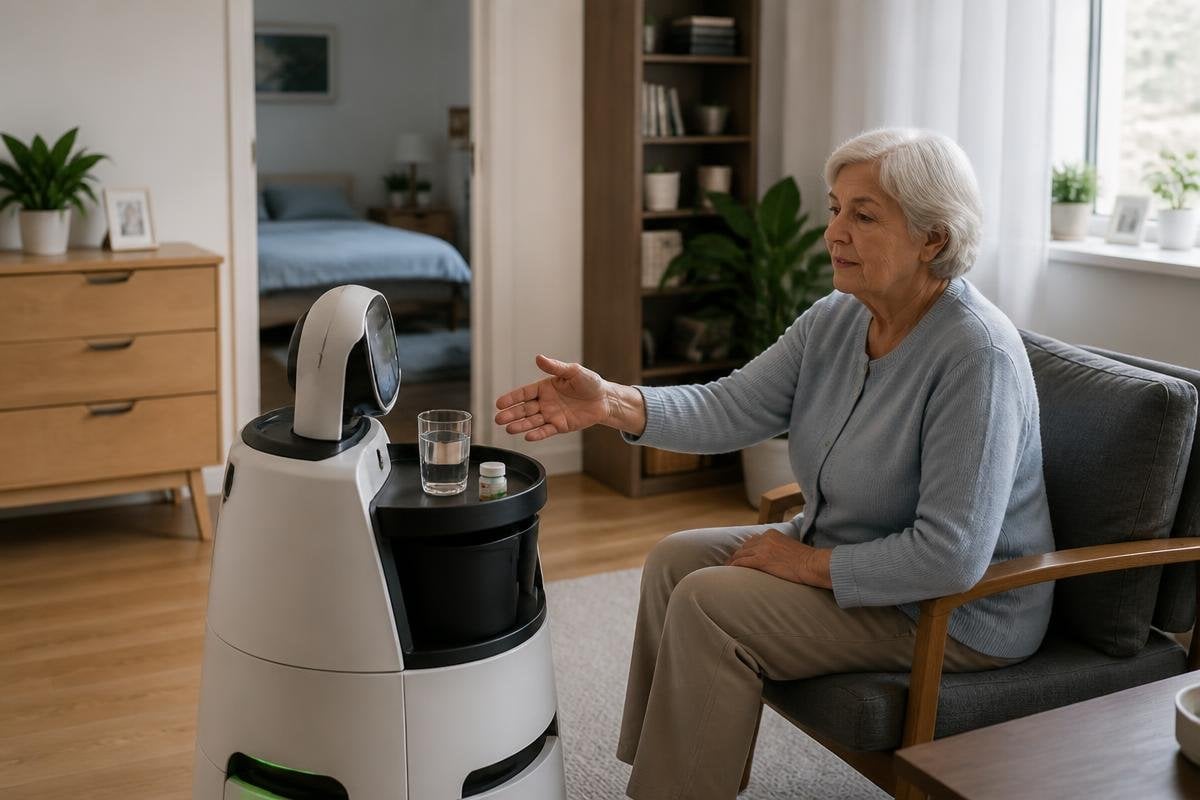
A care robot can remind someone to take medicine, help them stand, or call a nurse after a fall. It can also enter private spaces, record behavior, and make choices that affect a person’s daily life. The machine’s value depends on how those choices treat the person using it.
- Dignity means control, privacy, and a say in care
- A robot should support human choice rather than replace it
- Clear limits matter more than a friendly voice or human-like face
Dignity starts with control
Human dignity includes the right to make choices about your own body and home. The food-delivery robot can ask before entering a room. A lifting system can wait for consent when the person is able to give it.
Those small steps keep care connected to the person, rather than turning them into a task on a schedule.
Control also means a clear way to stop the machine. A person should know when the robot is listening, recording, moving, or calling another person. Physical controls, spoken commands, and a visible status light can make those actions easier to understand.
The person receiving care may have limited movement, speech, or memory. The system still needs a way to hear refusal and confusion. Treating silence as permission can make a private decision without real consent.
Privacy is part of respect
Care robots may use cameras, microphones, contact sensors, or health data. Each tool can help with a task, but each one also gives the machine more information about a person’s life. A bedroom camera needs a stronger reason than a motion sensor near a doorway.
Data collection should match the task. If a robot only needs to detect a fall, it may not need to record every conversation or keep video for months. People should know what the system stores, who can see it, and when the data will be deleted.
Respect also depends on what designers choose not to collect or automate. Robot 24 covers robotics companies, machines, and research, helping readers connect technical choices with their effects on privacy, independence, and everyday human contact.
Human contact cannot be reduced to a task
A robot can carry a tray or send a reminder. It cannot take responsibility for a painful decision, understand a family history in full, or replace the comfort of a trusted person. A care plan that removes human contact may leave someone physically supported and socially isolated.
The strongest use of a care robot keeps people in the loop. The machine can handle repeated physical work, while a nurse, family member, or support worker makes the judgment that needs human knowledge. That division also gives the person a route to appeal a decision.
A human-like face does not solve this problem. It may make a system easier to talk to, yet it can also hide the fact that a machine has limited knowledge. People deserve plain information about what the robot can do and where a human must take over.
Who answers when the robot fails?
A dignity-based design needs a named person or organization responsible for the system. If a robot blocks a doorway, misses a warning sign, or shares private data, the person affected should know whom to contact and what will happen next.
The system should record enough information to explain major decisions. That record can help a care team check why a reminder was sent, why a call was made, or why the robot stopped. It should support review without turning the person’s entire life into a permanent file.
I would reject any care robot that makes refusal hard or hides its data practices, even if it completes its main task well. Good care starts with a person’s rights, then asks where a machine can help.
A practical check before deployment
Use these questions before a robot enters someone’s home or care setting:
- Ask for consent: Can the person agree, refuse, or change their mind?
- Show machine activity: Can they tell when the robot listens, records, or moves?
- Limit the data: Does each sensor collect only what the task needs?
- Keep human contact: Who checks in without relying on the robot?
- Plan for failure: Can the person stop the system and reach a human quickly?
- Review decisions: Is there a record that a care team can inspect?
The open question is how much control people will keep as care robots take on more daily tasks. The answer should be visible in the controls, the data policy, and the human contact available when the machine gets it wrong.
