

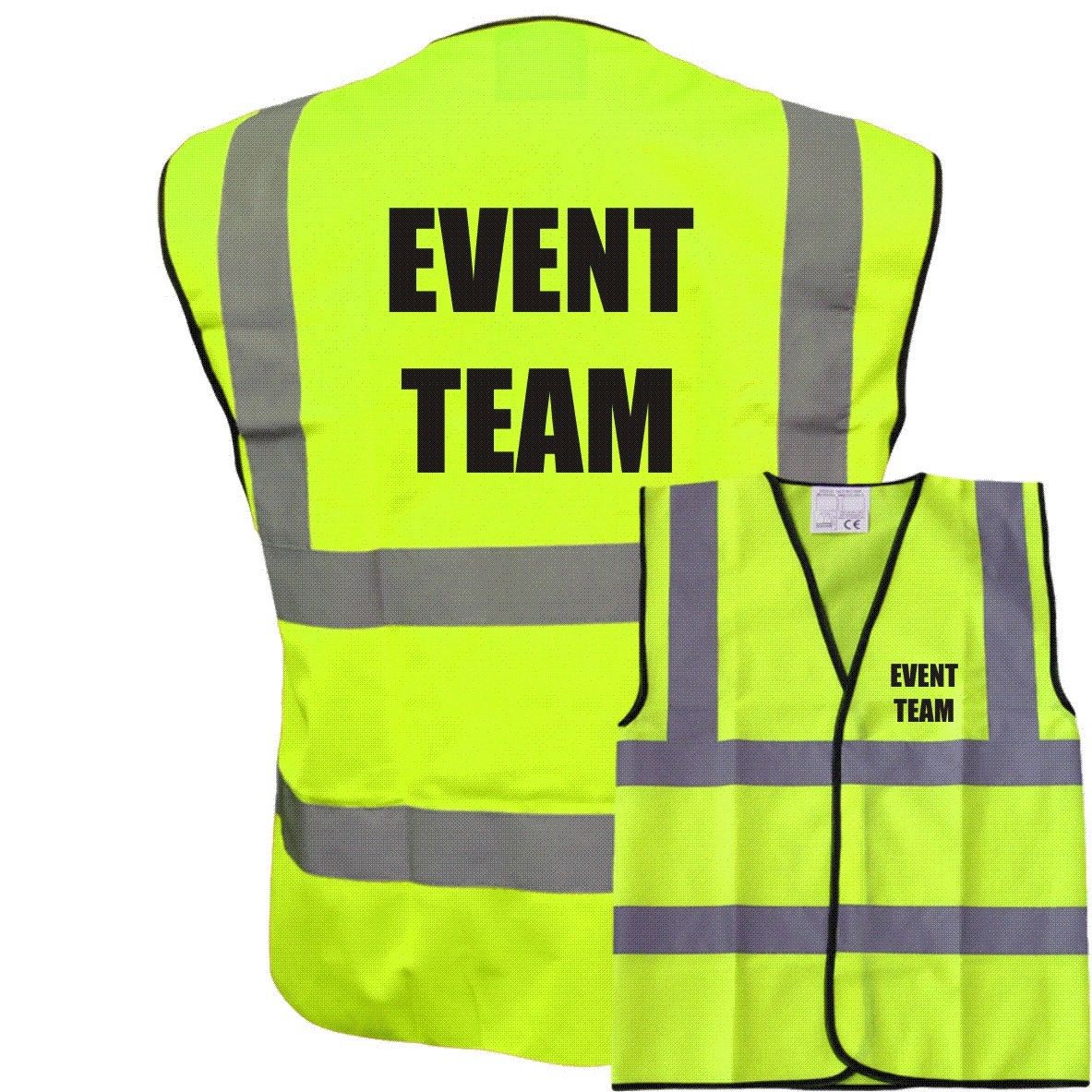
For installation companies, venue operations leads, and seasonal facility managers running mixed crews across multiple sites, printed safety vests deliver operational value that off-the-shelf hi-vis cannot. A custom-printed vest identifies the crew, distinguishes the supervisor, communicates the company brand, and supports public-facing professionalism at high-traffic events. The customization can be done without compromising the ANSI compliance of the underlying garment, provided the printing is specified and applied correctly. This guide covers what printed safety vests deliver, what the compliance rules actually require, and how to make smart procurement decisions for the season ahead.
The Operational and Safety Case for Printed Vests
The case for customization rests on three pillars. First, identification: on a holiday installation site with multiple subcontractors, an event load-in with dozens of crew members, or a peak-season distribution center, a printed vest quickly tells site managers and visitors who is on the crew, who is supervising, and which company they represent. Second, professionalism: a branded vest on a customer-facing installation crew communicates that the company is organized, accountable, and serious about its work. Third, safety role clarity: a vest printed with SUPERVISOR, SAFETY, or MEDIC allows the right person to be found quickly in an emergency, without the searching that costs minutes in a real incident.
ANSI 107 Compliance and What Printing Can and Cannot Do
The U.S. standard for high-visibility safety apparel, ANSI/ISEA 107, sets minimum requirements for fluorescent background material and retroreflective trim. Class 2 vests require at least 775 square inches of fluorescent material and 201 square inches of retroreflective tape; Class 3 vests require at least 1,240 and 310, respectively. Any printing covers a portion of the fluorescent background and reduces it.
The compliance question is straightforward: after printing is applied, the vest must still meet the minimums for the class it claims. A small chest logo or moderate back print on a Class 2 vest typically poses no issue. A large back-panel print can push visible fluorescent area below the threshold, which downgrades the vest to Class 1 or out of compliance entirely. Reflective trim should never be printed over. A reputable customizer will calculate the remaining visible area before accepting a job that pushes the limits.
Printing Methods Compared
Several methods are used for safety vest customization, each with its own characteristics:
- Heat transfer vinyl (HTV). The most common method for safety vests. Durable, supports multi-color designs, and adheres to both solid fabrics and the mesh common in lightweight vests. Cost-effective for both small and large orders.
- Screen printing. A traditional method best suited to high-volume orders on solid hi-vis fabric. Less ideal for textured or mesh constructions.
- Heat transfer paper. Used for photographic or complex designs, with less durability than HTV across repeated wash cycles.
- Embroidery. Generally not used on hi-vis fabrics, since the thread does not typically meet hi-vis specification and can damage mesh vest panels.
For most holiday installation and event applications, heat transfer vinyl is the right default unless the order volume justifies screen printing.
What to Print and Where
The most useful printed content varies by role and operation:
- Company logo. Back center is standard, with secondary chest logos for closer-range visibility.
- Role identifier. SUPERVISOR, CREW, SAFETY, MEDIC, ELECTRICAL, or RIGGING text helps both crew and venue staff quickly identify the right person.
- Crew or project name. Useful for multi-team operations and distinguishing one company’s crew from another’s on a shared site.
- Safety messaging. Reminders or hazard identification can be appropriate in specific environments.
- Event branding. Sponsor or partner logos for large-scale public events, when contractually required.
Placement matters as much as content. Back center is the most visible from a distance and to vehicle traffic, which is why most identifying prints land there.
Care and Longevity Considerations
Printed safety vests last longer with appropriate care. Wash in cold water on a gentle cycle, avoid bleach and fabric softeners, and air dry rather than tumble dry on high heat. Heat-transfer prints in particular degrade quickly under high heat. Most quality printed vests should hold up across a full installation or event season with reasonable care.
Where to Source Printed Safety Vests
For operations teams ready to outfit a crew with vests that combine ANSI-compliant visibility and clear crew identification, working with a specialist that understands both the apparel and the printing process is the right call. National Safety Gear offers custom-printed safety vests in the full range of ANSI classes and configurations, with printing handled to compliant specifications. Browse the customization options today to spec the right vests for your installation, warehouse, or event venue team.
