

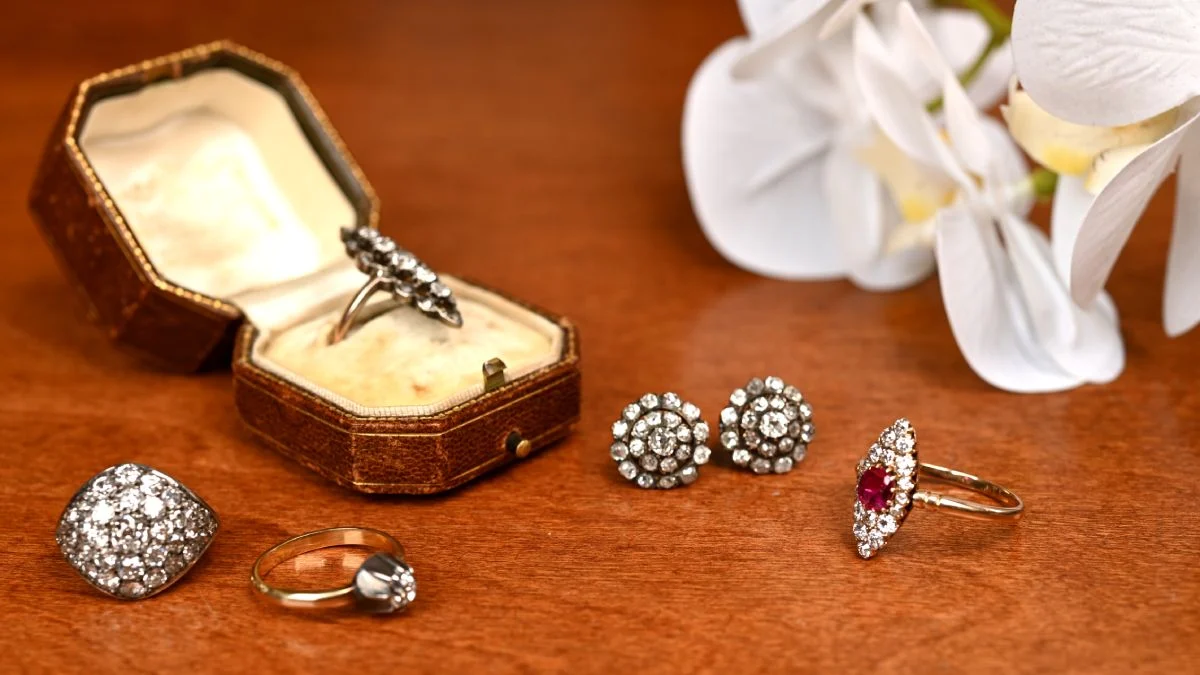
For shoppers entering the market for the first time, the world of estate jewelry can feel both deeply appealing and slightly opaque. The category covers a remarkable range of work, from delicate Georgian mourning rings to architectural mid-century cocktail pieces, and the terminology is not always self-explanatory. This guide is written for the engagement shopper, the gift buyer, and the collector who wants a clearer map of what the category actually contains, why it commands the prices it does, and how to begin acquiring with confidence.
What Counts as Estate Jewelry
The term is broader than many newcomers expect. It refers to any piece that has been previously owned, regardless of whether it is antique, vintage, or relatively recent. By industry convention:
- Antique generally means at least 100 years old.
- Vintage typically refers to pieces between 20 and 100 years old.
- Estate captures both of the above, along with newer pre-owned pieces, including some contemporary signed work that has simply changed hands.
The distinction matters for pricing and authenticity standards, but the unifying thread is that every piece in the category has a history. It was made for someone, worn by someone, and selected by a dealer or auctioneer to enter the secondary market. That history is part of what gives the category its character.
The Major Eras at a Glance
A working knowledge of the eras helps both buyers and collectors navigate the category quickly.
Georgian (1714 to 1837). Hand-cut foiled gems set in silver-topped gold, often using closed-back settings. Survivors are rare and prized for their workmanship.
Victorian (1837 to 1901). A long era of varied styles, including romantic early Victorian sentimentality, the heavier Grand Period, and the lighter Aesthetic Period that closed the century.
Edwardian (1901 to 1915). Platinum filigree, garlands, bows, and an emphasis on lightness and lacework. Diamonds and pearls dominated.
Art Nouveau (1890 to 1910). Sinuous lines, plique-à-jour enamel, and naturalistic motifs that broke sharply from Victorian convention.
Art Deco (1920 to 1935). Geometric symmetry, platinum, calibré-cut colored stones, and architectural design language drawn from the machine age.
Retro (1935 to 1950). Bold yellow and rose gold, large center stones, and Hollywood-influenced glamour reflecting wartime metal restrictions.
Mid-Century (1950 to 1970). Texture, abstraction, signed designer work, and a turn toward modernist sculpture in wearable form.
Categories Beyond Engagement Rings
Engagement and wedding rings are the most visible part of the market, but they are far from the whole. The full category includes:
- Cocktail and dinner rings in vivid colored stones, frequently underpriced relative to their craftsmanship.
- Brooches and clips from every era, often signed by major houses and currently enjoying renewed interest among stylists.
- Necklaces, lavalieres, and sautoirs that span the dramatic length of art deco evening wear to the layered chains of mid-century styling.
- Earrings, including pendant, day-and-night convertible, and chandelier styles.
- Bracelets and bangles, from Victorian gold rope chain to deco diamond line bracelets.
- Lockets, signet rings, and sentimental pieces that carry meaning as well as material value.
- Signed pieces from major houses such as Cartier, Van Cleef and Arpels, Tiffany and Company, and Oscar Heyman, which form their own distinct subcategory.
Why Demand Keeps Growing
Several forces are driving sustained interest. Younger buyers are entering the luxury market with strong preferences for individuality and craftsmanship that mass production cannot match. Sustainability has become a serious purchasing factor, and choosing a piece that already exists is a quietly responsible decision. Auction results for signed period pieces have outpaced many traditional asset classes over the last decade, drawing in collectors who would not previously have considered jewelry as a serious holding.
There is also a cultural turn toward objects with story. A piece made in 1925 or 1965 carries a depth of provenance that nothing produced last quarter can replicate, and that depth is increasingly what discerning buyers are paying for.
How to Buy with Confidence
The category rewards patience and the right partner. Look for sellers who provide written documentation, original maker’s marks where applicable, independent gemological reports for significant stones, clear disclosure of any restorations, and a return policy that allows for outside review. Avoid sellers who resist scrutiny, who price aggressively without provenance, or who cannot speak fluently about the era and construction of the pieces they offer.
Where to Begin
For shoppers and collectors ready to explore the category seriously, the right specialist makes the difference between a confident purchase and an uncertain one. Gesner Estate Jewelry curates an extensive selection spanning every era covered above, with each piece accompanied by detailed provenance, expert evaluation, and the kind of transparency that supports both immediate enjoyment and long-term value. Browse the current collection to find a piece that will deepen your appreciation for the category and serve as a meaningful part of your life for decades to come.
